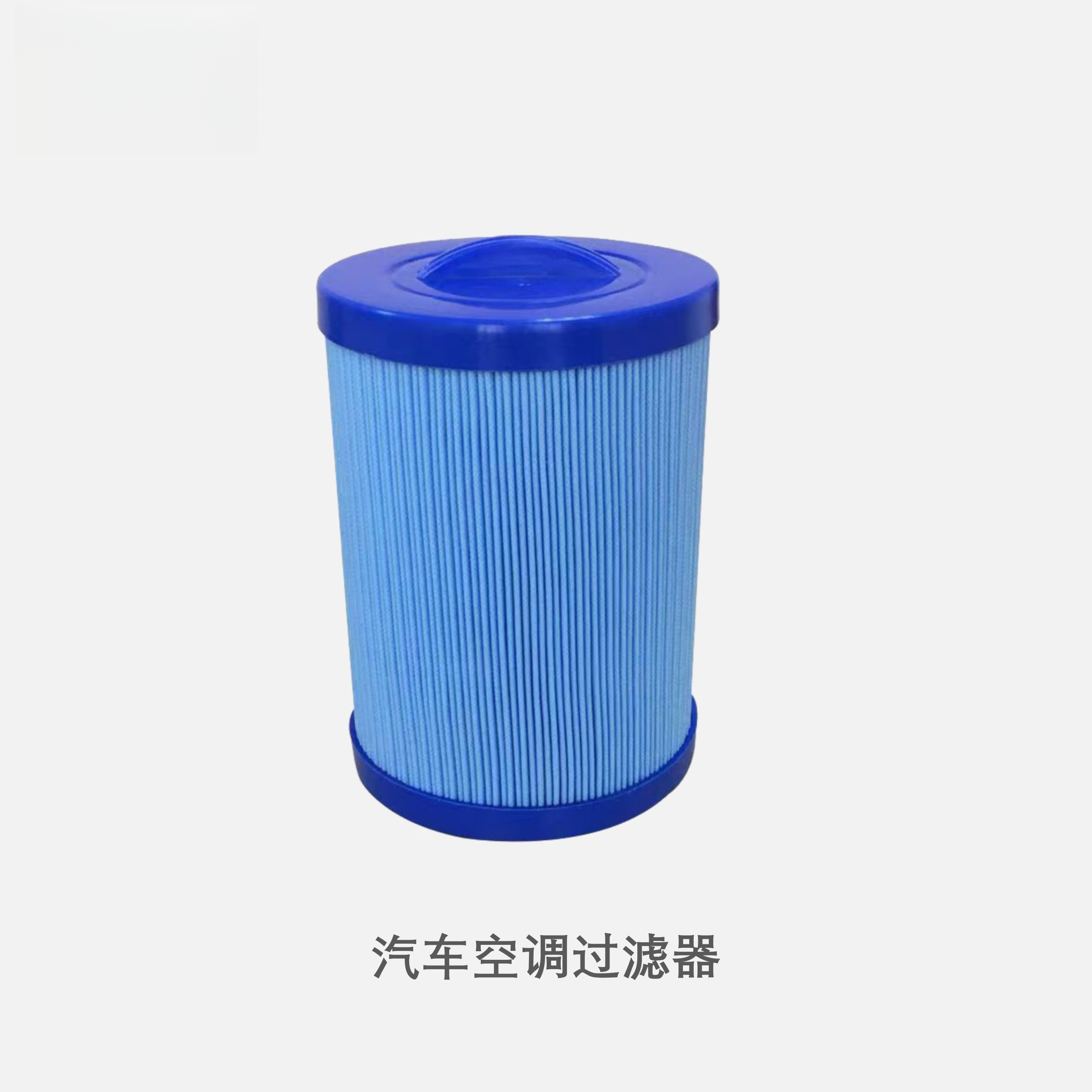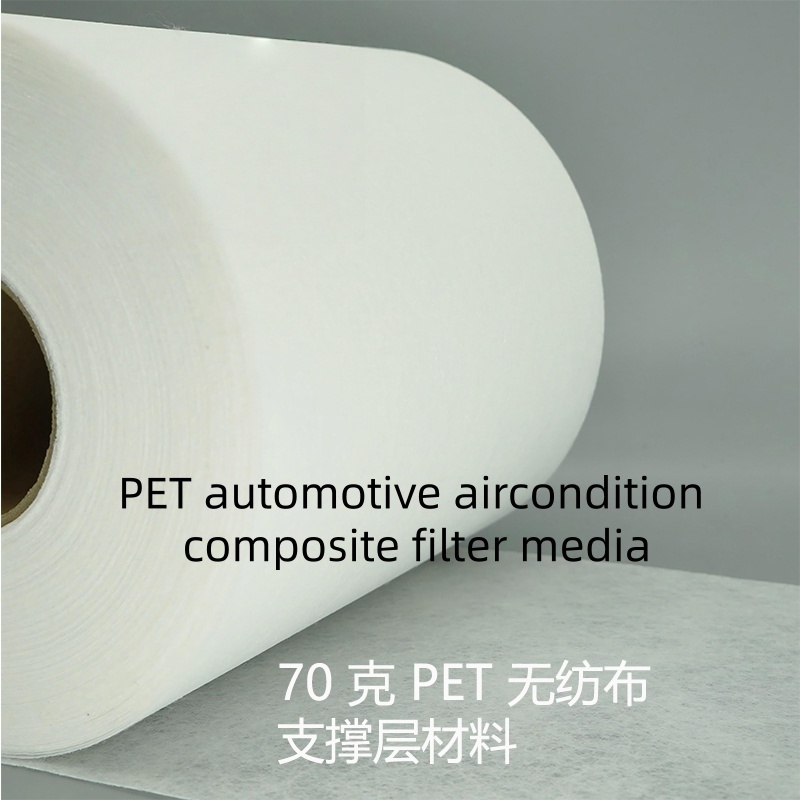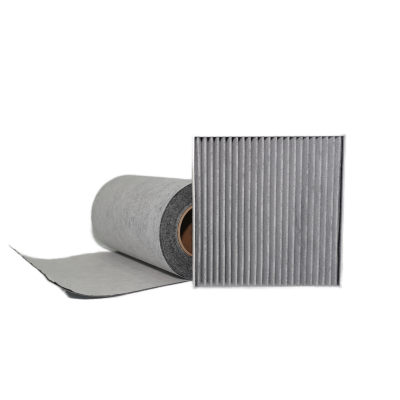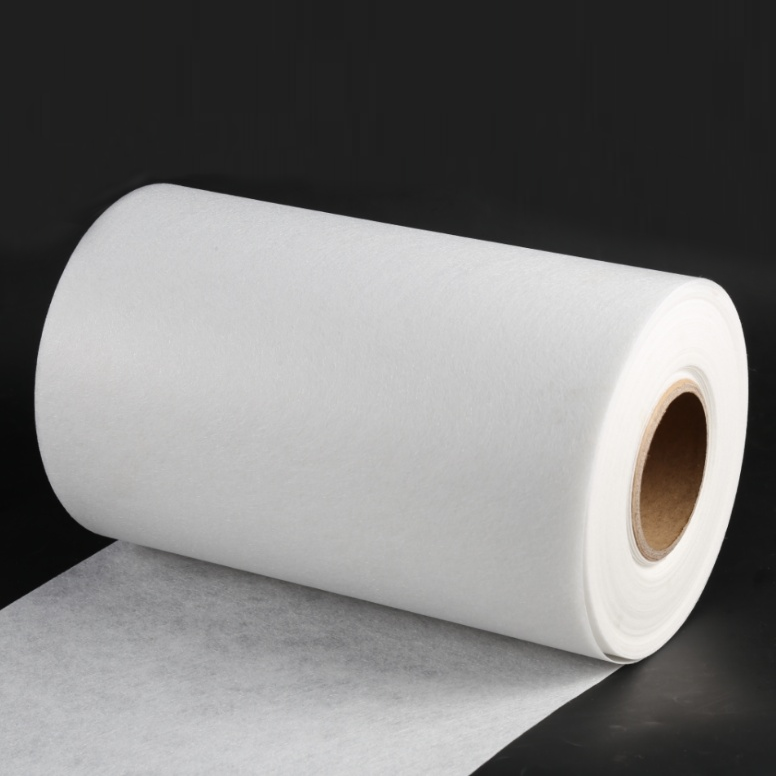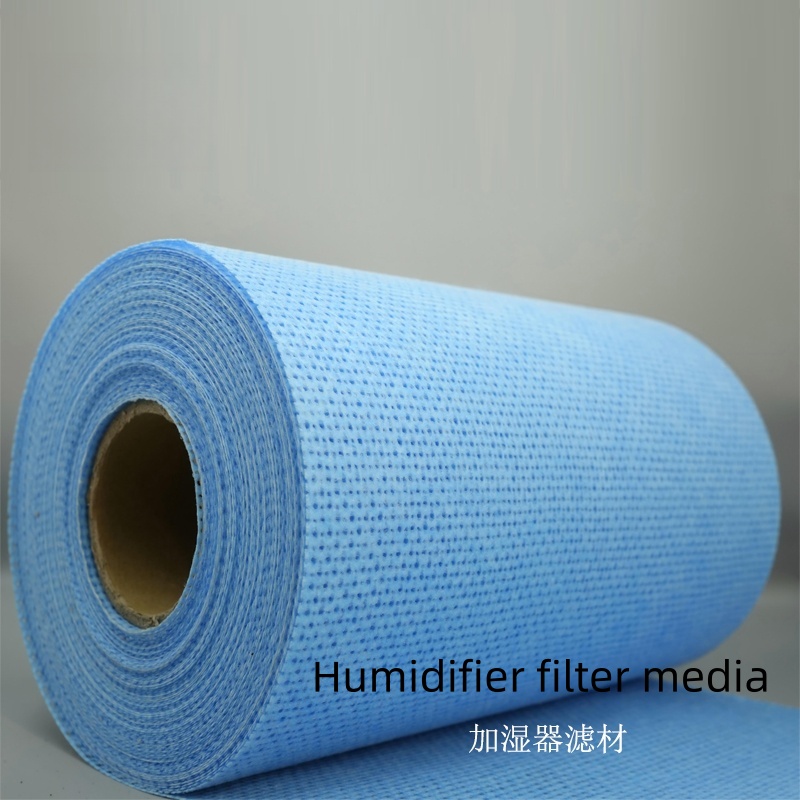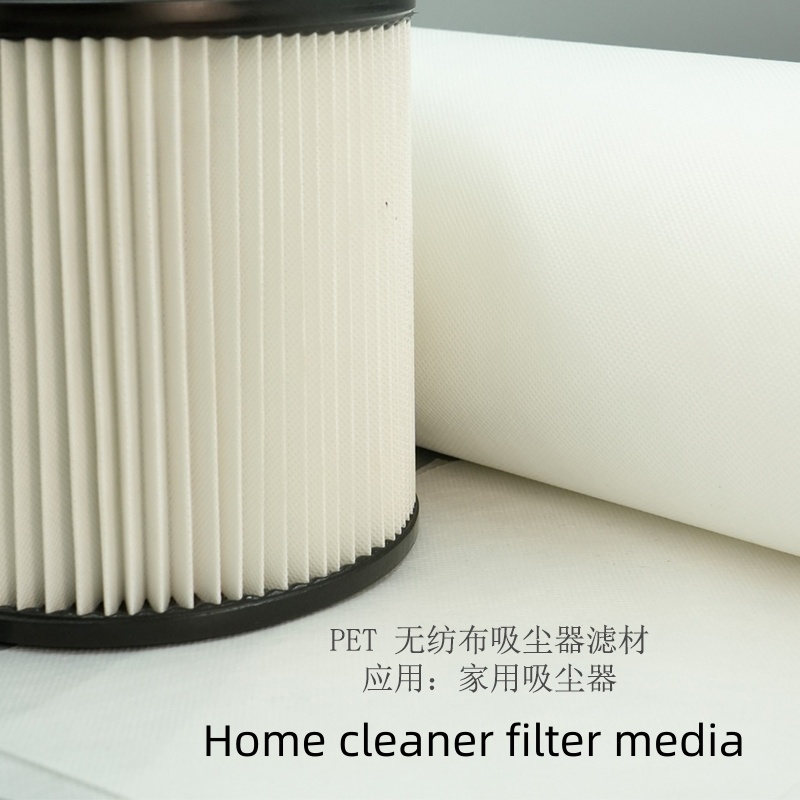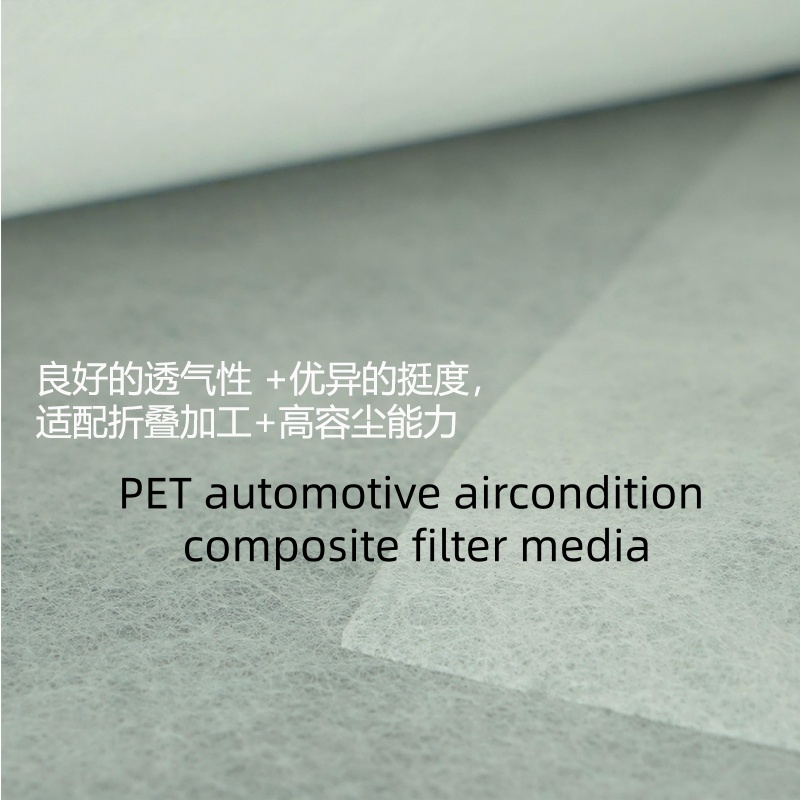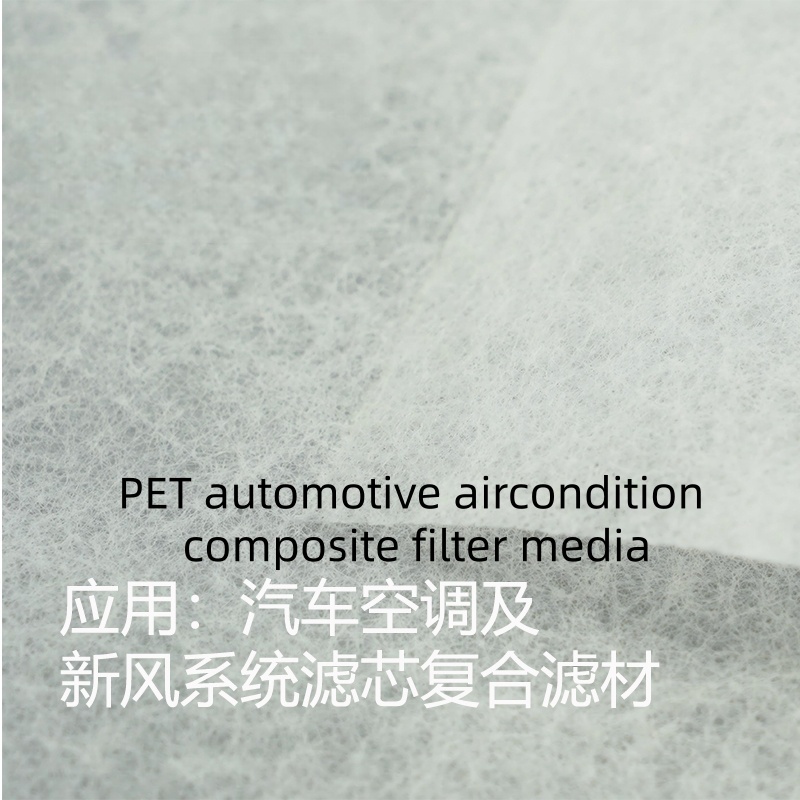

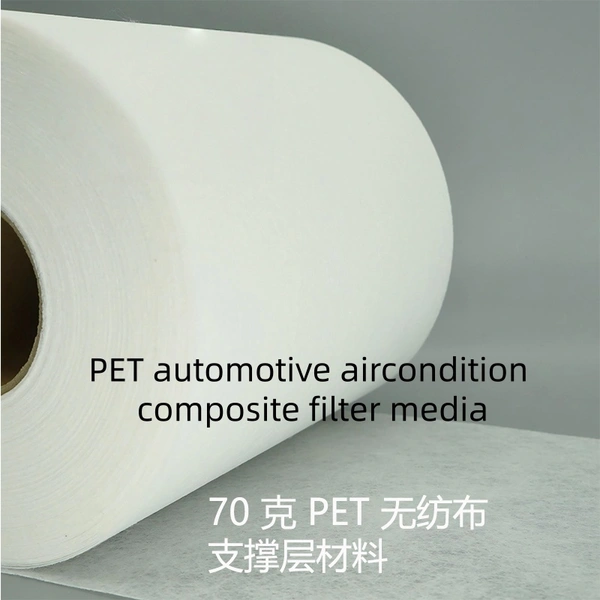
First paragraph (Core: Basic physical properties, laying a solid foundation for structural support)
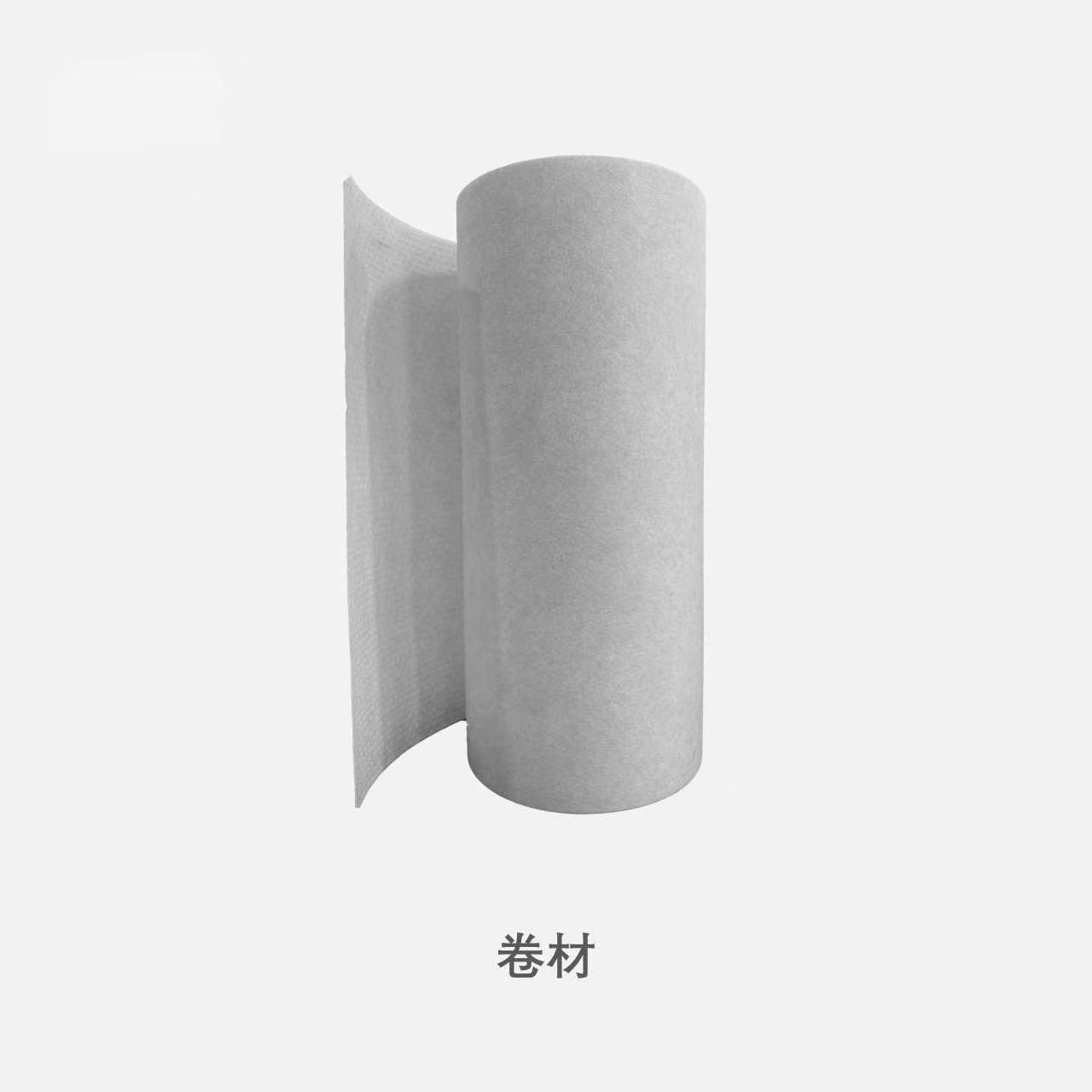
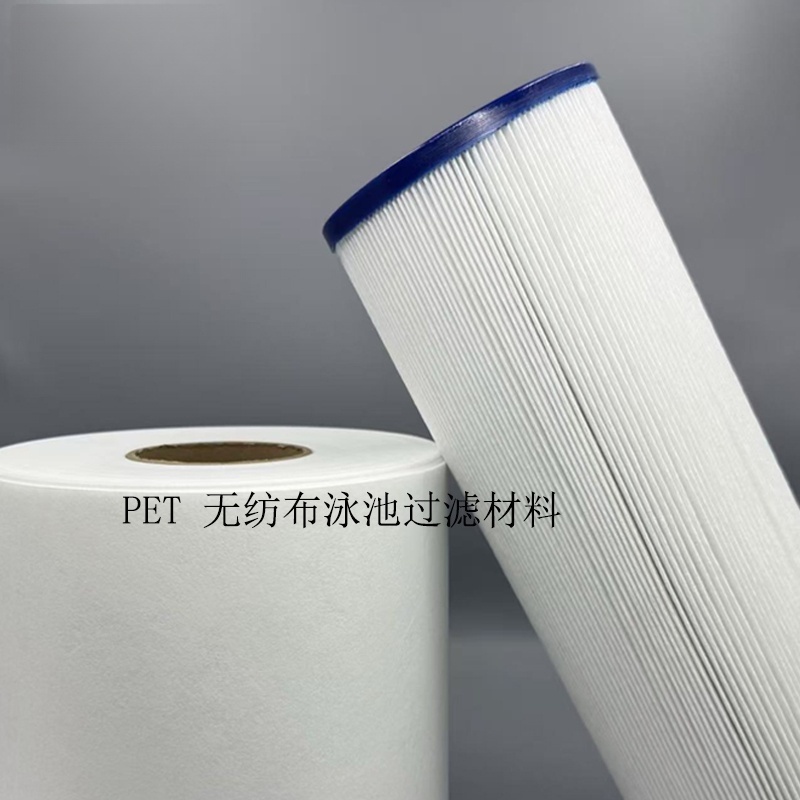
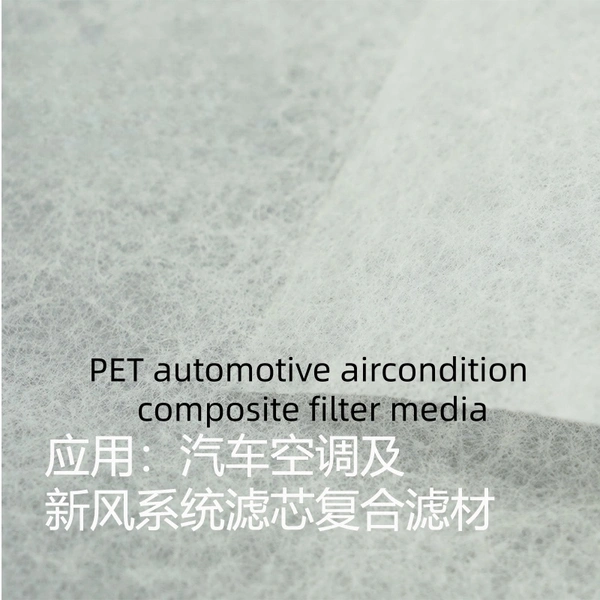
This PET material, used in composite filter media for automotive air conditioning and fresh air systems, exhibits excellent basic physical properties. Its basis weight (gram weight) adheres to a standard of 70±10% g/m², and its thickness meets the requirement of 0.40±0.1 mm, providing a robust physical framework for the material. Under the complex operating conditions of automotive air conditioning and fresh air systems, such as continuous airflow impact and friction between the filter media and other components, this material maintains its shape well due to its stable basis weight and thickness, resisting damage and deformation. It provides reliable support for the overall structure of the composite filter media, ensuring structural stability and maintaining good structural integrity throughout long-term use, thus continuously fulfilling its supporting role.
Customized materials: All performance parameters, efficiency parameters, and specifications such as basis weight and thickness of the materials can be customized to meet specific needs.
The second section (core: wind resistance and breathability, balancing support and airflow)
With a wind resistance of ≤1.5 Pa, this means that air encounters minimal resistance when passing through the PET material, minimizing its impact on the airflow efficiency of automotive air conditioning and fresh air systems. During system operation, it ensures smooth airflow through the filter material, allowing for timely circulation and purification of the air inside the vehicle or building. An air permeability of ≥5000 L/m²·S further facilitates efficient airflow through the filter material, enabling rapid air circulation in automotive air conditioning and fresh air systems. Even while providing structural support for the filter material, it maintains high airflow efficiency, achieving a good balance between structural support and airflow efficiency. This provides a stable support structure for the filter material without compromising the system's air delivery performance.
The third section (core: tear strength, enhancing filter media durability)
In terms of tear strength, the material exhibits ≥120 N in the longitudinal direction and ≥100 N in the transverse direction, giving it strong tear resistance. During vehicle operation, the filter element composite material may be impacted by airflow carrying impurities, or subjected to external forces during installation and disassembly. This material is not easily torn, maintaining its structural integrity and ensuring the filter material continues to effectively perform its structural support function. Whether subjected to longitudinal or transverse external forces, the material's excellent tear strength resists damage, further enhancing the filter material's durability and ensuring stable structural support for the filter element composite material throughout its entire service life.
The fourth section (core: stiffness performance, ensuring the stability of the filter media's shape)
In terms of stiffness, the longitudinal stiffness is ≥150mm and the transverse stiffness is ≥200mm, giving the material good rigidity. In automotive air conditioning and fresh air systems, filter media need to maintain a certain shape to better cooperate with other components and play a structural support role. The high stiffness of this material allows the filter media to resist bending, wrinkling, or other deformations during use, maintaining a good shape at all times. This ensures stable and reliable structural support for the composite filter media, providing strong support for the normal operation of the composite filter media in automotive air conditioning and fresh air systems.